
Featured 3D Skin Texture Measurement & Analysis Systems
Explore our top-ranked multi-spectral skin diagnostic machines optimized for high-throughput clinical evaluation, dermatological research, and commercial aesthetic practice across South America.
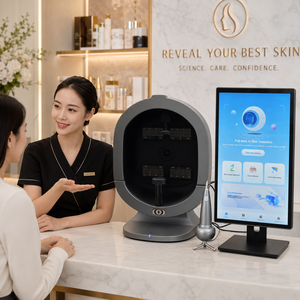
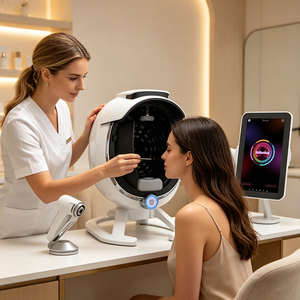
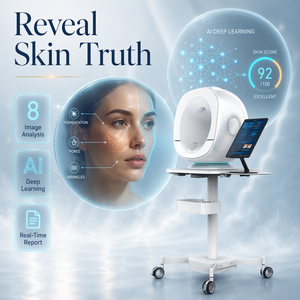
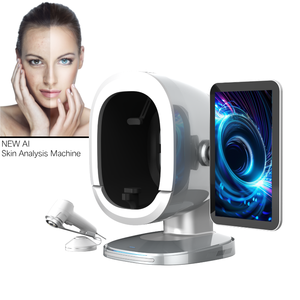
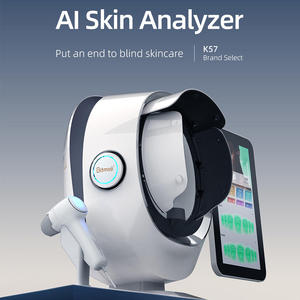
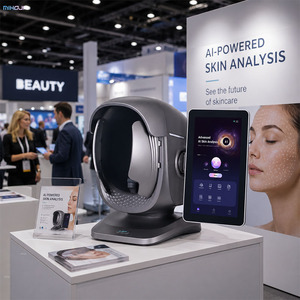
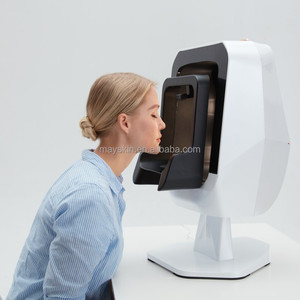
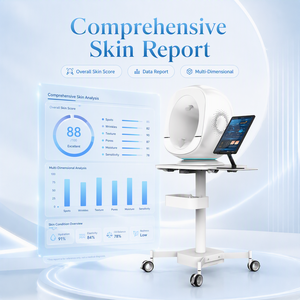
The Evolving Demand for 3D Skin Texture Measurement Tools in Brazil
Brazil stands as the world's second-largest market for aesthetic medicine and plastic surgery, trailing only the United States. In cities such as São Paulo, Rio de Janeiro, Belo Horizonte, and Curitiba, the concentration of dermatologists, aesthetic biomedicine professionals (Biomédicos Estetas), and high-end medical spas per capita is among the highest globally. However, as the Brazilian market transitions from subjective visual consultations toward quantitative, evidence-based dermatology, the demand for high-precision skin texture measurement tools and 3D facial analysis devices has surged exponentially.
Modern Brazilian consumers are increasingly discerning. Whether seeking non-invasive anti-aging interventions (such as biostimulators like Sculptra and Radiesse, ultra-sound HIFU, or fractional CO2 lasers) or specialized care for tropical skin conditions (such as melasma and solar elastosis), patients demand objective proof of efficacy. For Brazilian clinic owners and cosmetic manufacturers operating under strict local competitive dynamics, deploying a validated 3D optical skin analysis machine is no longer merely a marketing enhancement—it is an indispensable clinical asset that drives treatment conversion, patient retention, and medico-legal security.
Information Gain Insight: Unlike standard 2D digital photography, which is subject to environmental ambient lighting variations and facial posing inconsistencies, modern 3D skin texture measurement tools utilize Photometric Stereo Imaging and multispectral polarimetry to reconstruct sub-millimeter 3D surface topographies. This allows clinicians to quantify dermal roughness ($R_a$, $R_z$ parameters), wrinkle volume ($mm^3$), and vascular erythema independent of external lighting shifts.
Distinct Skin Typologies & Dermatological Challenges in the Brazilian Demographic
Evaluating skin texture in Brazil requires specialized optical engineering due to the extreme genetic diversity of the Brazilian population. Across the country's regions, skin phototypes span the entire Fitzpatrick Scale (Types I through VI). This diversity introduces distinct optical challenges:
- High Sun Exposure & Photo-Aging: Due to Brazil's high UV index, solar keratosis, micro-wrinkling, and deep epidermal texture breakdown are hyper-prevalent even in younger cohorts.
- Post-Inflammatory Hyperpigmentation (PIH) & Melasma: Higher Fitzpatrick phototypes (III–VI) common in Brazil are prone to PIH following aggressive aesthetic treatments. Diagnostic tools must accurately separate subsurface melanin concentration from superficial skin roughness.
- Expanded Pore Structure & Sebum Dynamics: The humid tropical climate in northern and coastal Brazil exacerbates sebaceous gland activity, requiring high-resolution optical mapping to distinguish between true structural pore dilation and temporary oil accumulation.
Scientific Principles of Quantitative 3D Skin Roughness & Micro-Relief Analysis
To understand why leading Brazilian clinics and cosmetic Contract Research Organizations (CROs) are replacing conventional RGB cameras with advanced 3D skin analyzers, one must examine the underlying optical physics. Legacy systems rely on flat two-dimensional pixel intensity, which fails to capture depth, contour, or true tissue elevation.
Photometric Stereo Topography
By illuminating the skin from multiple precisely calibrated angles using directional LEDs, the system captures subtle shadow gradients. Software algorithms calculate local surface normals at every pixel, mathematically reconstructing the micro-relief topography in true 3D space.
Multi-Spectral Chromophore Unmixing
Utilizing parallel cross-polarized lighting and specific narrow-band wavelengths (including UV and near-infrared), the analyzer isolates the spectral absorption signatures of Melanin and Hemoglobin from background structural scatter.
Key Quantitative Parameters Measured by Advanced Skin Texture Tools
For Brazilian dermatological researchers validating anti-aging claims or clinicians tracking botulinum toxin degradation, objective numerical metrics are required. Advanced devices quantify:
| Diagnostic Parameter | Measurement Unit | Clinical Significance for Brazilian Patients |
|---|---|---|
| Mean Roughness ($R_a$) | Micrometers ($\mu m$) | Quantifies micro-texture fine lines and skin smoothness post-chemical peels or microneedling. |
| Maximum Profile Height ($R_z$) | Micrometers ($\mu m$) | Measures deep wrinkles, sleep lines, and severe acne scars (boxcar/icepick depths). |
| Wrinkle Volume & Area | Cubic Millimeters ($mm^3$) / $mm^2$ | Provides exact 3D volumetric reduction metrics following bio-stimulator or hyaluronic acid filler injection. |
| Epidermal Melanin Index (EMI) | Calibrated Optical Density Unit | Isolates epidermal vs. dermal melasma severity to guide IPL and picosecond laser parameter selection. |
| Vascular Hemoglobin Concentration | Relative Erythema Score | Tracks rosacea, telangiectasia, and post-procedural inflammation recovery. |
| Pore Morphological Volume | Count & Depth Distribution ($\mu m$) | Differentiates between structural elastin loss pores and clogged sebaceous infundibula. |
How to Evaluate Skin Texture Tool Manufacturers & Factories for the Brazil Market
Importing medical aesthetic equipment into Brazil requires navigating complex regulatory frameworks, high import tariffs (Imposto de Importação), and logistics demands. For Brazilian medical device distributors, aesthetic franchise networks, and cosmetic manufacturers, selecting the right overseas OEM/ODM manufacturing factory is a strategic decision that directly impacts profitability and operational compliance.
1. ANVISA Regulatory Readiness
Ensure the OEM factory provides complete Technical Files (Arquivos Técnicos), ISO 13485 quality management certificates, IEC 60601 electrical safety reports, and CE/FDA clearances necessary to expedite Brazilian ANVISA (Agência Nacional de Vigilância Sanitária) registration.
2. Optical Hardware Repeatability
Factory precision must guarantee sub-micron spatial resolution. Request optical calibration certificates verifying light-emitting diode chromatic stability across multi-year operational lifespans under tropical ambient humidity.
3. Software Localization & PT-BR UI
The software ecosystem must support native Portuguese (Português do Brasil) diagnostic report outputs, patient management databases, and seamless cloud sync compliant with Brazilian LGPD (Lei Geral de Proteção de Dados) privacy laws.
Localized Application Scenarios in the Brazilian Aesthetic & Dermatological Sector
To maximize Return on Investment (ROI), Brazilian clinics and research facilities integrate 3D skin texture measurement tools across specific operational pathways:
1. High-End Aesthetic Clinics in Jardins (São Paulo) & Ipanema (Rio de Janeiro)
In luxury aesthetic practices, consultations center on patient education and transparent outcome verification. Clinicians utilize 3D facial scanners during initial consultations to show baseline wrinkle depths, hidden UV spots, and skin roughness ($R_a$). Following collagen biostimulator treatments (e.g., Poly-L-lactic acid or Calcium Hydroxylapatite), follow-up scans at 30, 60, and 90 days demonstrate quantifiable dermal thickness increases and micro-relief smoothing, neutralizing patient skepticism and driving repeat treatment bookings.
2. Cosmetic R&D Centers & Contract Research Organizations (CROs) in Campinas & São José dos Campos
Brazil is home to massive global and domestic cosmetic brands (such as Natura &Co, O Boticário, and international labs). Skincare formulations targeting tropical sun damage require clinical efficacy trials. 3D skin texture analyzers provide objective, publication-ready statistical data proving anti-wrinkle efficacy, skin barrier repair, and pore-tightening claims required by regulatory authorities prior to market launch.
3. Post-Surgical & Dermatological Laser Rehabilitation
Plastic surgery is deeply rooted in Brazilian culture. Following procedures such as deep phenol peels, blepharoplasty, or facelifts, tracking scar tissue remodeling and surface texture smoothing is paramount. 3D optical profilers quantify scar elevation reduction over time, enabling surgeons to fine-tune post-operative topical regimens and low-level light therapies (LLLT).
Key Localized Trends Shaping the Brazilian Skin Diagnostic Equipment Market (2025–2030)
As the Brazilian beauty market matures, four key technological and commercial trends are redefining hardware procurement:
- Expansion of Aesthetic Biomedicine (Biomedicina Estética): Regulatory frameworks in Brazil empower licensed biomédicos, pharmacists, and nurses to perform non-invasive aesthetic procedures. This has broadened the buyer base from traditional dermatologists to thousands of independent specialized clinics, driving demand for cost-effective yet high-precision diagnostic units.
- AI-Driven Longitudinal Predictive Modeling: Modern Brazilian software platforms incorporate artificial intelligence trained on diverse skin phototypes to simulate future aging trajectories and predict how specific interventions will alter skin texture over a 5-year horizon.
- Shift Toward Compact & Wireless Systems: Mobile consultation teams traveling between satellite practices in regional hubs (e.g., Ribeirão Preto, Campinas, Niterói) require lightweight, highly durable 3D analyzers with tablet integration rather than bulky full-tower consoles.
- Integration with Customized Galenic Formulations (Farmácias de Manipulação): Brazil possesses an immense compounding pharmacy market. 3D texture and moisture reports generated at clinics are increasingly used to prescribe personalized skincare serums customized to the exact micro-relief deficits of individual patients.
Why Direct Sourcing from Our Manufacturing Facility Empowers Brazilian Importers
Leveraging over 15 years of continuous innovation in 3D skin optics, photometric stereo algorithms, and multi-spectral diagnostic systems, our factory delivers clinical-grade hardware engineered to exceed demanding international standards.
ISO 13485 & Cleanroom Production
Our manufacturing facility operates under strict ISO 13485 medical device quality protocols, utilizing Class 10,000 optical assembly cleanrooms to eliminate microscopic lens contamination and ensure flawless sensor calibration.
Custom OEM/ODM Software Localization
We offer full white-label customization for Brazilian distributors, including branded exterior casing design, customized Portuguese software interfaces, and tailored report layouts incorporating your corporate branding.
ANVISA Dossier & Technical Support
We supply complete technical documentation packages, EMC testing reports, and clinical validation studies necessary for your local Brazilian regulatory representative to successfully obtain ANVISA registration.
Direct Factory Logistics & Spare Parts Guarantee
By cutting out intermediate brokers, Brazilian buyers secure direct B2B pricing, 24/7 technical online support, and guaranteed fast-track component replacement shipped directly to major Brazilian ports and airports.
Frequently Asked Questions (FAQ) for Brazilian B2B Sourcing
What is the difference between a standard 2D skin analyzer and a true 3D skin texture measurement tool?
Standard 2D analyzers rely on simple RGB digital photographs and pixel brightness variations, which can be heavily distorted by room lighting changes, patient positioning, or camera angle shifts. A true 3D skin texture measurement tool utilizes Photometric Stereo technology or Structured Light Projection to capture elevation data in three dimensions. This enables quantitative measurement of physical wrinkle depth ($mm$), pore surface volume ($mm^3$), and micro-roughness ($R_a, R_z$) independent of ambient lighting conditions.
Are your 3D skin analysis machines compatible with ANVISA regulatory filing requirements in Brazil?
Yes. Our manufacturing facilities operate under ISO 13485 quality standards, and all diagnostic devices undergo rigorous IEC 60601-1 (electrical safety) and IEC 60601-1-2 (electromagnetic compatibility) testing. We provide Brazilian importers and distributors with full technical dossiers, circuit schematics, optical calibration validation, and factory audit certificates required by ANVISA for medical/aesthetic device registration.
Does the software support Brazilian Portuguese (Português do Brasil) and local data privacy (LGPD)?
Absolutely. All our commercial 3D skin analysis systems feature native Brazilian Portuguese user interfaces and diagnostic client report generation. Furthermore, patient database storage modules comply with Brazilian LGPD (Lei Geral de Proteção de Dados) standards, ensuring encrypted local patient record management and secure cloud backup options.
How does the device handle diverse Fitzpatrick skin types common in the Brazilian population?
Our advanced multi-spectral imaging arrays combine polarized white light, narrow-band UV (365nm), and near-infrared spectrum illumination. This optical separation allows the system to unmix epidermal melanin absorption from structural surface scatter, delivering accurate micro-texture profiles across all Fitzpatrick skin types (I through VI) without over-saturation or artificial distortion on darker skin tones.
What is the typical shipping lead time and warranty support for B2B orders shipped to Brazil?
Standard manufacturing lead times for bulk OEM orders range from 7 to 14 business days. Air freight delivery to major Brazilian international hubs (such as GRU in São Paulo or GIG in Rio de Janeiro) takes approximately 5 to 9 days. All machines carry a 2-year comprehensive factory warranty, accompanied by remote software updates, optical recalibration tools, and immediate spare component dispatch.
Can we request custom OEM branding and software logo integration for our clinic chain or distribution brand?
Yes. We specialize in factory-direct OEM/ODM partnerships. We offer custom exterior color schemes, silkscreened corporate logos on hardware chassis, customized software splash screens, and bespoke PDF diagnostic report templates tailored to your commercial brand identity in Brazil.
Accelerate Your Aesthetic Business in Brazil with Factory-Direct 3D Optics
Partner with a trusted global manufacturer. Request detailed technical specifications, ANVISA dossier samples, and direct B2B OEM wholesale pricing today.
Send an Inquiry